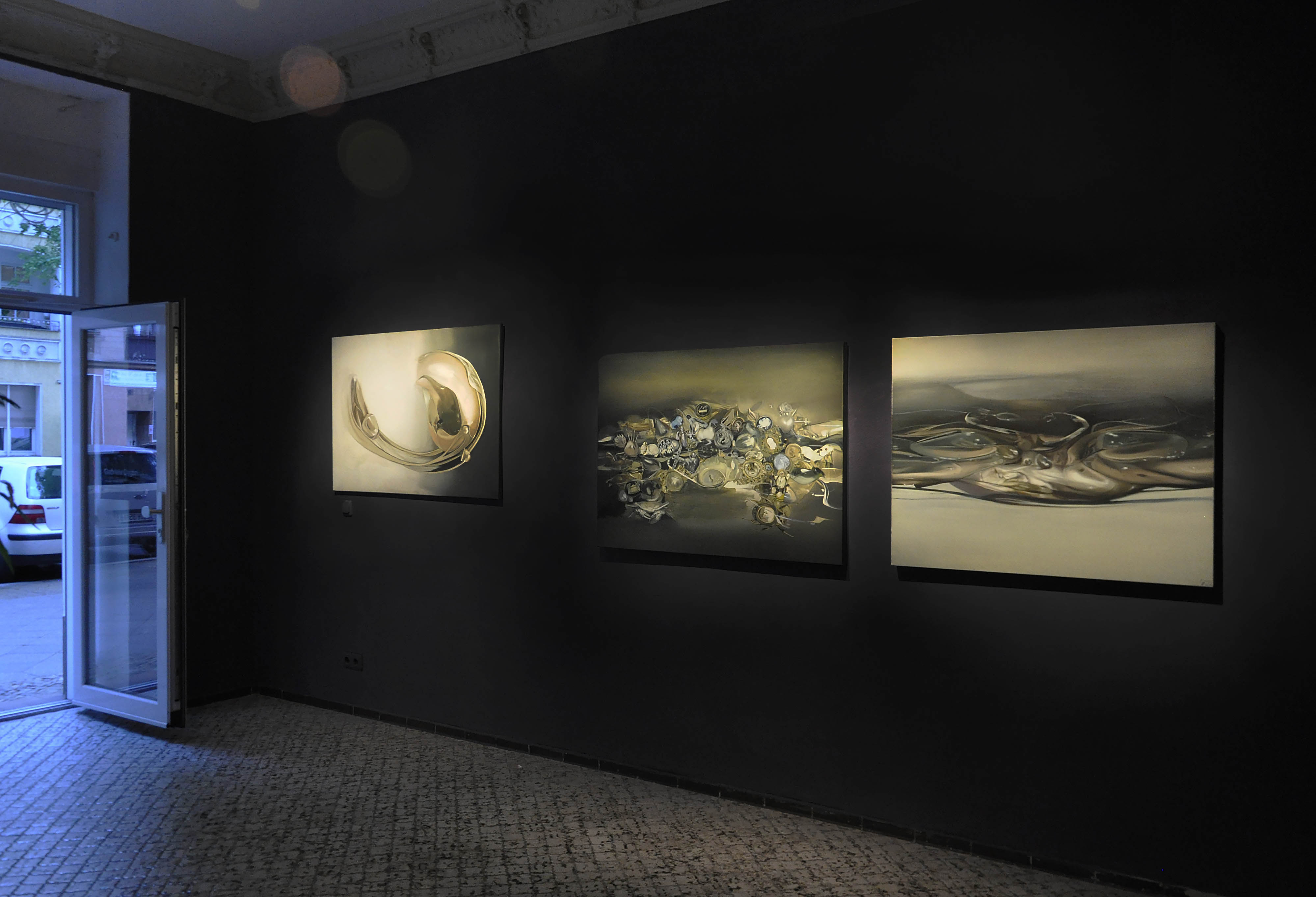
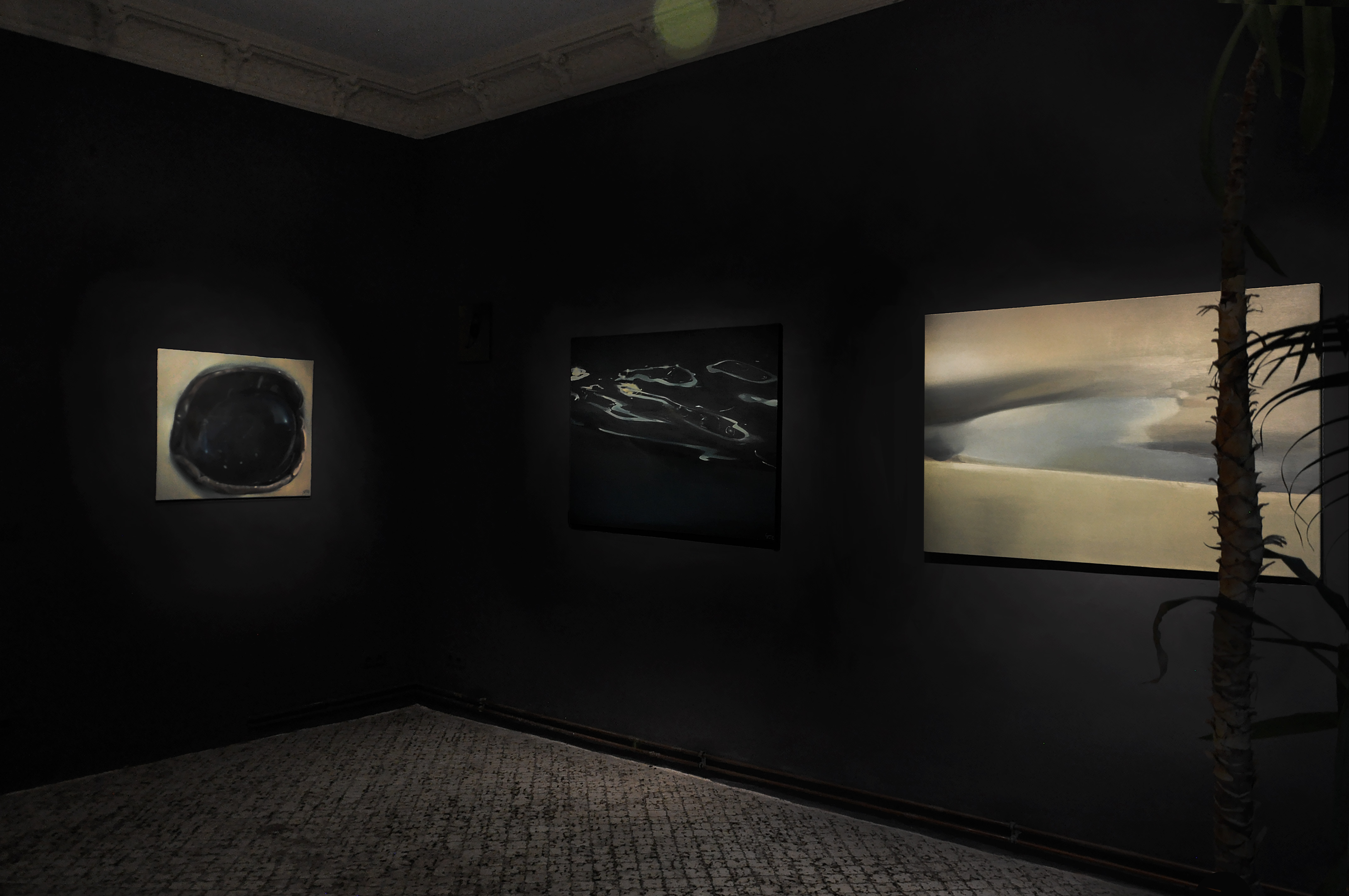
Reflections
KIT Gallery, Berlin 2024 Specimens, oil on canvas, 120x90 cm,Porto, Portugal 2023/24
Extravagant shells, discarded goblets, rotten fruit and bones. Impractical jewelry pieces, shiny insect shells, splintered vases, statues and trinkets washed ashore. Fish remains and rotting wood jiggle inertly to the rhythm of the murky wave.
An italian silver crab, Rome, 20th century (51cm)
Merry winery, probably Frankfurt am Main, 18th century. Baroque pearls, gold, enamel, silver, gold, diamonds, emeralds, rubies, sapphire, amethyst, carnelian, glass
Pendant with the penitent Saint Jerome, Spain
A cracked pearl egg
Seven Sorrows of Our Lady of Sorrows, Spanish Empire (107.7gm)
Mourning slide, 17th century. Gold, rock crystal, hair
A few shining beetles
Victorian butter dish in pear shape design, United States, 19th century
Order of the Golden Fleece pendant, 16th century, France
Golden chrysalis of the painted lady butterfly
Ecclesiastical ring with a miniature crucifixion scene, either France or Spain (ivory)
Art Nouveau toad inkwell, 20th century
“The tops were large, and were railed about with what had once been octagonal net-work, all now in sad disrepair. These tops hung overhead like three ruinous aviaries, in one of which was seen, perched, on a ratlin, a white noddy, a strange fowl, so called from its lethargic, somnambulistic character, being frequently caught by hand at sea. Battered and mouldy, the castellated forecastle seemed some ancient turret, long ago taken by assault, and then left to decay.”
“They will descend into the tunnels that we had dug deep under the pole. It is still -70 degrees here. And that's why this place has outlived all the large cities in the world. They walk on, and on. And then, this. As if we wanted to leave one remnant of our presence on this planet, they would find a frozen sturgeon, mysteriously hidden away beneath the mathematically precise true South Pole. They stash it back away into its frozen shrine for another eternity.”
“When the Federation first made contact with the Tamarians, although their universal translators could successfully translate the individual words and sentence structure of Tamarian speech, they were unable to convey the symbolic meaning they represented. Without prior knowledge of the Tamarians' history and legends, a word-by-word translation was of no use to someone attempting to communicate with them. This language barrier led to the isolation of the Tamarian people after all attempts at communication had failed.”
Excerpts: Herman Melville, “Benito Cereno”; Encounters at the End of the World (2007); “Tamarian language”, memory-alpha.fandom.com